Words

Could you go five seconds? Clearly, words have influence over the mind. One could easily argue that words dominate the mind. And therefore, words should be studied and understood if we wish to make the claim: “I have control over my mind”—since words are consistently in there. Words are tools of communication, communication is directly dependent upon clarity, and clarity is a requirement for learning. (Communication is a vital branch unto itself, but here I’m focusing on the reception mechanics of communication, not the transmission mechanics.)

This first lesson is, only in part, about semantics. Semantics is the study of what a word means, what it represents in reality. A written word is only a symbol for something in reality. Words are merely proxies. The funny squiggly lines your eyes see are merely funny squiggly lines. However, the funny squiggly lines your mind sees have endless important messages.
But here’s the point: you yourself are generating the meaning behind every funny squiggly line you read. There is no inherent meaning to the funny squiggly lines we call words. There is no almighty authority declaring what funny squiggly line words must mean—it’s nonsense to think that way. (I understand shapes do have inherent symbolic meanings, and sounds do have inherent meaning, but that’s not what I’m referring to here.)
You have associated the funny squiggly lines with real life meanings, through your own agreement. And you’ve done this so often and for so long, that you now make those associations with your automatic unconscious mind, beyond your immediate awareness. And those meanings must be agreed upon with others if communication is to be clear, and thereby, if learning is to happen.
Your super-computer brain is automatically translating these symbols constructed of funny squiggly lines into meanings for your mind, you are with everything you ever read, and if you don’t catch your automatic associations on certain “emotionally charged words” you’re going to lose the intended meaning behind the writer’s use of the word. It is imperative that you define the writer’s or speaker’s words as they do, or else communication—and thereby learning—will break down.

Definition means taking it in the opposite direction of the infinite, away from any sort of relativity. Definition means the finite, not the infinite. Each word you read or hear must be pinpoint accurate, on the button, a bullseye, seen with articulate CLARITY if complex and specific communication about objective reality is to happen. Yes, words can be interpreted in a poetic, art-oriented, inspirational sense, of course, and there is nothing wrong with that. Words can and should be beautiful works of art. But when it comes to complex and specific communication about objective reality, we need mutual definition, not individual imagination. We need pin-point accuracy, not poetic prose. We need established agreements, not personal perceptions. There is a time for art, just as there is a time for logic. The personal dictionaries have got to match up, or else communication will break down.
(It’s another branch altogether, but we are practicing Alchemy when we use language. Real-life Alchemy, not any misty mountain crap. We are taking “lead,” something that doesn’t have much value—like funny sounds and squiggly lines, and transmuting it into “gold,” something that does have value, a lot of value—like complex useful communication and beautiful art. From the meaningless we create the meaningful.)
I’d like to extend the meaning of “semantics” to include not just the meaning of words, but also the meaning of symbols. And a symbol could be anything, from your hands to a tree to the spiral arms of the milky way galaxy, to a word. One could even re-word “semantics” to “symbolics.” And so, under this extended definition: semantics is never a petty argument, semantics is the very foundation of learning anything. Information is pouring into you every moment, how do you decode, decipher, and translate that information—what does it mean to YOU?

Words can be quite tricky. Words are alive in many ways, they come and they go, they are born and they die. Slang and lingo are clear evidence of just how alive words are. We attach meaning to funny sounds we make with our voices, and we attach meaning to funny symbols me make with our hands, yet words rule the world. Language dominates reality. A few choice words of insult and someone can go from cool and calm to crazy and murderous (I’m sure I don’t need to give any examples of that).
It’s rather interesting how funny sounds out of one’s mouth can control the mind of another with such intensity, isn’t it? “But there’s no such thing as mind control.” Yeah right, get real. If I were to start “swearing” (making certain funny squiggly lines) lots of people will actually get emotional upset—mind controlled—from looking at funny squiggly lines. I mean, what the fuck is up with that?
In a world of pansy ass he said/she said Internet insanity, where is that old saying: “Sticks and stones may break my bones but words can never hurt me.” Is that notion long gone or what? Emotional fragility has become the socially accepted norm, and people wonder why things are so messed up? When a few choice words can make someone suicidal, murderous, or downright evil, I think it might just be time for people to learn about what powers words wield, and what words actually are. Don’t you?
Words are both wonders and weapons, both tools and traps, both inventions and incarcerations. Words are psychological clay, that can be remolded and reshuffled over and over again into any shape imaginable, by the individual and by whole societies, no matter how much time goes by. The origin of a word can be traced back to some very strange, and often very important, places (Eptomology is the study of a words origins. Pursuit of it may result in a reshuffling of your reality, and it’s another big branch unto itself).
A definition for a word can change with time, be distorted or stretched, for good or ill. The same word can have different meanings depending upon who’s using it and in what context. New meanings can be attached to familiar words, and old words can be revived with new meanings. The same word can be interpreted in two or more ways.

So when you read or hear my words, I must request that you do all you can to define them as I do, or else communication will begin to break down. I will make my words, and their definitions, be as clear as I can. (Simple Google searches for definitions can help.) But no matter the clarity, if the words are upsetting, communication will still break down. Hearing what you don’t want to hear and yet still choosing to give it the time of day is fundamental to learning. Learning is not repetition, learning is exploration. Fearless, intrepid, confident exploration, no matter how upset you get.
If you’ll recall, I said I’m not going to pamper any Egos around here—I will not restrict my voice for the emotionally crumbled who can’t handle intensity and passion, so I really don’t give a fuck if you offend yourself by judging certain funny squiggly lines as “bad.” Every word has a right to exist, every word has an appropriate situation. If you stub your toe so bad it almost breaks, do you say “Golly Gee,” or do you say, “Fuck!” I will not restrict the intensity and passion in my voice for that would restrict the intensity and passion in me.
Do you ever wonder why it’s called “strong language,” and you’re restricted from using it? Might that mean, on a subliminal level, you’re being commanded to use weak language? I’d like to see a warning label for: “contains weak, pathetic, passionless language,” so I can save myself the time. I am not interested in catering to your every emotional reaction, suppressing myself every second so you’ll only hear what reinforces your walls, or anything else along those lines, for those are lies. I live, speak, and write with authenticity, with who I actually am, from my heart, mind, and body. And while I fully respect your right to believe whatever you want, I will not edit myself for your beliefs. Being emotional and being passionate are not freaking crimes, they are part of our humanity! When evil is wrecking your home and trampling down your gardens you have every right to get angry and whoop some ass.

Imagine if I said the word “fuck” to someone who had never heard it before in all their life, like someone from a foreign country. They would merely wonder what this funny sound means. They wouldn’t get upset. They wouldn’t claim I’m a potty-mouth. They wouldn’t have any emotional reaction. But you do? That means the word itself isn’t the upsetting cause, your perception of it is the upsetting cause—you are the one generating the upset, not the word!
Perhaps the sexual connotations are too much for you to handle, or perhaps the raw intensity of the word is too much for your mind. Perhaps you don’t like how some people can express themselves truthfully and you’ll still living a lie. So to all those who claim I don’t have the right to use certain words, or that I’m going to lose “valuable audience members” by using them… fuck off.
My target audience is not the weak-minded. To those who cannot stand in confident humility and say to themselves, “I was wrong,” while staring deep into their own personal spiritual mirrors of mind (this has nothing to do with trivial bullshit), there is nothing left for you here. You won’t be able to handle what’s coming. Society can’t prepare you for truth. The TV fails to equip you with what you’ll need. The school isn’t a curriculum for critical thinkers, it’s a mind-grinder that cranks out an obedient worker-class.
I dare you to stare deep into the spiritual mirrors, and say to yourself: “It’s easier to harm another than it is to heal myself. It’s easier to insult another than it is to understand myself. And it’s easier to hate another than it is to forgive myself. Have I been taking the pansy ass easy way out, or have I been engaging the warrior worthy challenging truth?”—if you’ve got the balls to do so.
Or, you can go ahead and seek to harm me (you won’t upset me), seek to insult me (I love a good laugh), and seek to hate me (won’t remove the love in my life one bit). I know why you would. The easy is always the better route… for you, for the Ego. We are trained to fear tears, by masters who fear our awakening. I’m not here to “make you happy” (I do that elsewhere), I am here to make you see. For through your true sight will you find your true happiness. I’m not here to throw some good food over your walls, I’m here to shatter your damn walls so you can walk out beyond them and enjoy the Gardens for yourself.
But even with the greatest of efforts through words, there is only so much that can be done with these funny squiggly lines. (And yes, I myself am still looking into those spiritual mirrors of mind, but unlike far too many, I am willing to say the 3 most powerful words: “I was wrong.”)
And please keep in mind this website and the lessons therein are a general introduction of my philosophy. I’m not going to dive into every point there is to make on every subject, especially in the complex world of words. While I do branch out a lot, I’m not developing those branches. I’m mentioning many different subjects as we continue, that will hopefully entice you into thinking about something more, so you can branch off in whatever direction you feel called to. Here on this site, I’m devoted to helping people learn about the most important subject there is, for it leads to an understanding of any other subject—and that’s learning itself.
While there is the basic categorization of words through nouns, verbs, and adjectives, there is another categorization of words that needs to be fully understood for clarity in communication, what I simply and quickly label “tangible words,” and “intangible words.”
When I use a word that is symbolic of something tangible (that which can be experienced through one or more of the five senses) such as “basketball,” you create an image in your mind of what that is, based upon your senses, namely vision. Which, simply speaking, is the same sense of vision that essentially everyone uses. We all see the same basketball, and again, that’s simply speaking—I’m not looking to philosophically complicate here. Everyone, for the most part, uses the same five senses.
The doors of perception you walk through to experience the tangible are essentially the same doors of perception everyone else walks through. Hence the reason we can clearly agree what a “basketball” is. And if anyone wants to argue with that, just give ’em a good bounce of a basketball against their head—they’ll figure out real quick what it is, and that it is real. Anything that can sensed by one or more of the five senses is a “tangible word.”
However, when I use an intangible word (that which cannot be experienced through one or more of the five senses) such as: “Intelligence,” what image do you create in your mind? Can you see “Intelligence”? Hear, taste, touch, or smell it? I didn’t ask if you can see an intelligent person, that’s seeing a person—that’s not Intelligence itself. Just what is the objective reality implied by the word Intelligence? Different people have different definitions of what exactly is Intelligence, and this goes for countless other intangible words.
So what is the reality implied of all the intangible words we use? What is: real, fake, love, fear, joy, hate, happiness, depression, right, wrong, manipulation, judgment, blessing, stupid, objective, subjective, heaven, hell, dimension, past, future, communication, devotion, betrayal, heart, mind, good, evil, magic, sorcery, mind, control, liberation, government, authority, freedom, anarchy, peace, chaos, fantasy, reality, power, and so on and so forth? When you read or hear these words, are you thinking the exact same thing everyone else in the world is?
The doors of perception you walk through to experience the intangible can be so radically and vastly different from others, that not only can the definition of a word have different meanings, the same word can imply two completely opposite things between two people. “Anarchy” is a prime example. If the same sentence is carrying a thousand different meanings we do not have clear communication, we have comfortable interpretations. For artistic endeavors this is generally a wonderful thing, but for scientific endeavors this is certainly a nightmare.
We are not all walking though similar doors of perception when it comes to the intangible—the individual human mind is perceiving a vastly more different world than the universal five human senses—and this manifests a crippling breakdown in communication, and thereby, a debilitating blockage in the learning process. This is a major problem in the world that needs to be addressed and understood, asap.

“Anarchy” means chaos to some, and freedom to others! And that’s just one simple and clear example. Some will say “intelligence” means jumping through the school system’s hoops and making it past the big college hoops to get that degree. “I have that degree, therefore I’m intelligent.” Others will say “intelligence” has nothing to with the school system and it’s a matter of how well the overall functions of the brain/heart system are operating, connected, and communicating, namely the right and left hemispheres of the brain working with each other, as opposed to against each other. I could go on for hours.
Some say “fantasy” is a worthless waste of time, others say it expands the imagination and helps to see the way out of real life messes. Some say “real” is merely a fabrication of the human mind, everything is relative, there is no reality, and you get to make up what is true and what is not. Others say “real” is the objective absolute reality that effects you every moment of life and there isn’t a thing you can do to change that reality. “Real” can also be used to describe temporary social creations of human minds, like “Of course that man-made law is real, some profit-whore wrote it down on piece of paper, therefore it is real.”
And don’t get me started on the word “magic,” not yet anyway. I’m sure you see what I mean by getting accurate definitions for words, for intangible words. Connotation, meaning the context, is one of the most important elements of communication. You will hear me say it again and again until the entire world understands: Keep it in context or you’re not keeping it in truth.
One of the reasons communication breaks down is when somebody refuses to see a different connotation of a word whose reality directly challenges their programmed beliefs. Sometimes, a mind is so far gone into a low state of awareness, it can’t see your connotation of a word. Again, “Anarchy” is a prime example. Some people cannot imagine a world without rulers, without masters, without any “authority” figures whatsoever. Any word that implies such a world is not even part of their vocabulary. It can’t be until their imaginations and their awareness of what is possible—their Consciousness—expands enough so that they can see what you mean.

There are many reasons why words are the first lesson. Here’s some big branches for the future, for you to think about in your own time: Words are only as powerful as the minds that define them; The less a word is said, the more its meaning dies along with it; As a word is used in new contexts, so its meaning is redefined; When you’re naming something, you’re not experiencing it; Naming something and knowing something are two completely different things; Every word is a thread of the web you are ether walking across, or trapped in.
Put those in your pipe and give ’em a good toke. We must come to universal-as-possible agreements about what intangible words actually mean. First and foremost, about what is right and what is wrong, the objective reality implied by those words that has nothing to do with human belief. Come on, other fish are moving up onto the land, you should to! (At another time I will make a gigantic list of intangible words and the various different confusions that can result from them, but I’m sure you can explore that on your own.)
When you can, stop, relax, and observe the overwhelming number of intangible words used in everyday life, and anywhere else. When you pay close attention, you’ll find we use intangible words constantly and overwhelmingly, and we barely use tangible words at all! Every word in this paragraph up to this point (besides “words” and “paragraph”) did not symbolize something one or more of your five senses can detect.
“Number,” you say. What color is “Number”? What does it sound like, look like, taste like, smell like, feel like on your fingers? A single number isn’t even tangible. Point to “3”—not three of something, nor the funny symbol that represents the value of three. The concept of a number is not something your five senses can detect. “Life” is not a tangible word ether. A flower is tangible. The forest is tangible. A dog is tangible. But life itself is a not a tangible thing, is it? Point with your finger to “life.” Where is it? Are you pointing to a dog, a cat, a fish, perhaps a human being, or a single cell under a microscope? Those are tangible things your eyes can detect, but they are not life itself. Those are life-forms, not life-force.
And here’s a perfect example for the importance of understanding intangible words and the profound effect they are always having upon communication. Some people tend to use the word “life” as a generic term to describe any life-form, while other people tend to use the word “life” to describe the life-force. I define “life” as a force beyond the five senses. And if you look back at the paragraph, you’ll see the context in which I used “life,” and you’ll see I was not referring to any sort of life-form, but rather to the life-force, or “everyday life” in our world.
Context means the story, the situation, the environment, the circumstances, the parameters, around something. The frame in which it is. Context is invaluable, context cannot be understated, context is always needed, for it sharpens and hones definitions, and refines the pinpoint accuracy needed for clear communication. Context is yet another invaluable branch.
Do not get me started on the people who take things out of context and sight semantics arguments to pamper their precious Egos, boost up their reputation rating and push their agendas. There is no absolute “authority” on semantics, on what any single word “actually means,” for a word’s meaning is decided upon by the agreements between the minds using it.
And we must come to universal-as-possible agreements about what every intangible word means, or else we’re not communicating as human beings through a healthy exchange of dialogue that moves all parties in a positive direction, we’re “communicating” as mindless monkeys flinging poop at each other in a debate that crushes one Ego in favor of another. Keep it in context or you’re not keeping it in truth. And keep your poop to yourself.
So what does this percentage of tangible vs intangible words tell you about the fundamental nature of our minds? What does it tell you about the importance of Consciousness? What does it tell you about just how much reality there is beyond the five senses?

Without deviating from the core trunk and going into that massive branch (which I’ll definitely do at another time), understanding tangible and intangible words are important because they lead to accurate definitions. And accurate definitions are the very foundation of learning. So when you read or hear my words, do all you can to define them as I do, or else you’re not hearing me, you’re only hearing what you want to. Accurate definition is necessary before learning about anything can even begin.
When you use a tangible word, its meaning is tough to misunderstand, for the definition is clear. This is because the mind receiving the tangible word has experienced its implied reality for itself. Simply put, we all see the same basketball. And therefore there is agreement about what the word “basketball” means. But, when you use an intangible word, the meaning is often misunderstood, it’s often tough to understand. Unless… (drum roll please) the mind receiving the intangible word has experienced its implied reality for itself.

Trying to explain what it’s like falling in love is not easy, if not impossible. “You’ll just have to wait till it happens to you,” is a popular phrase. No amount of words, no matter how poetic and prosed, will ever truly translate the beauty of a colorful sunset to a man born blind. He will have to experience it for himself, somehow, in order to really “get it.” And, on the same page, no amount of words, no matter how poetic and prosed, will every truly translate the beauty of heart, virtue, love, and all those other intangible components of reality, to a man “born blind”—or made blind. He will have to experience it for himself, somehow, in order to really “get it.” (Remember, “tangible” means perceivable by the five major senses, the word does not relate to the feeling capacity of our hearts. The intangible can certainly be felt.)
Now of course, poetry and prose can translate things unto themselves through feelings, that go far beyond just the words themselves, and of course a man born blind can experience beauty. The point I’m making here is that the experience and the word go hand in hand. To maximize clear communication, always consider how your words are being defined by your audience.

As another example: talking about heart to someone without one is a waste of time. He’ll be thinking about an organ that pumps blood, or some silly fantasy a human-primates brain fabricated to deal with a harsh reality—while you’re talking about the fundamental force of true humanity. If he’s never entered into heart, and gone “out of this mind,” he’ll never understand. Until he himself experiences what you mean by the word heart, he can never “get it.” The story of someone who isn’t a spiritual person, but then goes through radical spiritual changes after a near death experience, is the norm, for they experienced something spiritual for themselves. It’s not a matter of belief, it’s a matter of experiencing it for yourself. When the walls of a finite society come crashing down, the endless landscape of the Infinite Universe will shine upon you.
It is the chosen power of direct experience and perception expansion that will fuel a beautiful future, not the commanded memorization of information under the “get the grade or else gun.” Go for direct experience, awareness expansion, and the shattering of walls, that is where the learning happens.
(This isn’t a place where I discuss the debate about spiritual experiences only being part of the brain’s creation. That is another complex and loaded subject unto itself, that I’ll tackle at another time, but to touch upon it: How is it that you, see thought? Who or what is looking at your thoughts? Mr. Materialist, when you say, “I have a brain,” who is this “I” you speak of? Claiming the “I” is merely the result of neuronal connections, and nothing more, still does not explain how and why we experience. The brain receives and translates information to create an experience, and an experience requires an experiencer, does it not? Consciousness and Information need one another to create Existence, don’t they? But this is a blog about the overall process of learning, specifically here about the power of words.)
And, for it must also be said, no amount of words will ever be enough to fully reveal all those intangible things that are, not so beautiful.

Imagine the following situation: A dozen people are working on the same 10,000 piece puzzle together, but they’ve lost the box cover, there’s no end-image to work toward. All they have are the pieces. Yet each one is working toward a different image, everyone has their own idea of what the box cover’s image is. Everyone claims to remember what the image is…
“The green pieces go on the bottom.”
“No, they don’t, they go in the middle.”
“Green pieces? What the hell are you two talking about, there are no green pieces!”

And not only do none of them want to listen to what the others see, it’s even worse: none of them want to engage the actual solution, which is admit my box cover was wrong and I need the actual image! None of them dare poke their precious Egos and say: “I was wrong.” None of them desire the solution, which is to find the actual box cover so that everyone can see it for themselves (which is fortunately for them a tangible thing—hint hint). That puzzle can, not will, CAN never be completed until they all see the same box cover.
We throw around so many intangible words in society, related to what we say we want, such as peace and love and freedom, but is everyone seeing the same things when we use these intangible words? How many of us are working toward the same TRUE box cover? The same peace? The same freedom? The same love? The same truth? Does “peace” include the monetary system of money madness, the police and military forces of jackboots to the face, and governments who will spend your earnings however they see fit? Because when I use the word peace, none of those things are included—money, “authority,” or taxes.
Whenever I hear about a movement, I have to ask: what box cover is it moving toward? And while I do wish the benevolent movements out there the very best, I must also say good luck to them when they bump up against the thousands of other movements all working toward different box covers in that crazy-complex-madhouse of a civilization. Especially the established movements that will do any immoral action needed to keep the establishment, established. A movement is fine by me, but remember the goal is not to become confrontational, the goal is to become irrefutable.
Triangulate the truth. Triangulate a word’s meaning. Articulate intangible words. Bring clarity to confusion by experiencing it for yourself. Unfuddle the befuddling through a process of putting principles as your prime priority. Get back to basics, remember the simple can work just fine, clear your “life equation” of clutter and simplify your desires. Words are not the world, words are merely proxies for reality. When your brain is busy naming something, you’re not experiencing that something. Remember and relax into the still-point that is pure Consciousness.
Sometimes, if you want to come to your senses, you’re gonna have to go out of your mind. If words are not made into your tools, they become your traps. If a word doesn’t become your own Conscious invention, it remains a building block of your own unconscious incarceration (swear words are prime examples). Go beyond mere words, and find the feeling. Don’t let words control you, control them. Make words your bitch—not the other way around.
The Ego worships words as god, while the Self knows that words are simply useful tools. The Ego will jump to the defense of its almighty reputation, for it knows its flimsy state is build upon bullshit, it’s all scaffolding, patchworks, and external support beams—all well concealed. While the Self will laugh along with its insulter and have a good time, for it knows it stands upon a solid foundation of virtue and balance that flows along with the truth, unafraid of being frozen or boiled it’s free to embrace both extremes. The Ego is crazy-worried about appearances and reputation, while the Self is calmly focused on experiences and Evolution.
The Ego demands obedience, while the Self understands freedom. The Ego uses rhetoric for profitable positions, while the Self uses rhetoric for purposeful power. The Ego is only worried about its own pixels. The Self maintains a healthy concern for the entire picture. Ego feeds off beliefs to function, while the Self has faith in its own powers and awareness.
Some people might use the word ego without a capital “E,” to describe the positive and confident parts of someone’s psyche. I have no problem with that, no one owns a word, but I like to use one word to describe one thing as much as I can, for maximum clarity (at least when it comes to logical and scientific matters). So, I use the word “Ego” to describe the heartless, unbalancing, me-me-me mentality of most humans nowadays. “Ego” always means something negative within the context of my work. And than I use the word “Self” to describe the critically thinking, harmonizing, confident, heart-based life of an authentic and powerful human being. “Self” always means something positive within the context of my work.

I bring up this issue of tangible and intangible words because what is “learning”? Well, one foundational concept is: definitions determine learning. This cannot be stressed enough. Definition is actually deeper in the foundation than learning is. Your definitions of the words you hear and read must be defined as the speaker or writer defines them, no matter how unnerving that may be for you, or else you’re not receiving the information of another, you’re only receiving your comfortable interpretations of their words.
Learning is not a process of repeating what you want to hear over and over and over again, it’s a process of seeing what you have never seen before, of experiencing what you have never experienced before, as often as you can handle it. Learning is exploration, not repetition. Learning requires courage, it requires guts, it requires you brave the “Terra Incognita” (a Latin phrase for: “Lands Unexplored”). If you only ever see what comforts you, you will never see what lies blockade the truth.
WARNING! WARNING! WARNING!
Alert Message #101
From Your Friendly Thought Police
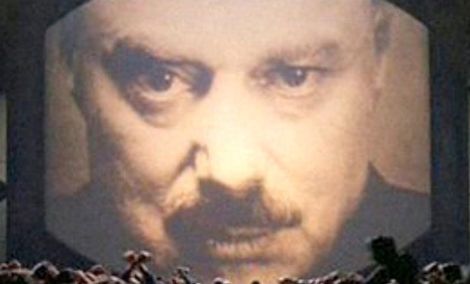
Attention! The following sections of this unprofessional and unauthorized blogsite have been flagged for containing information of a highly terrorizing nature. It contains an excessive amount of needlessly challenging information that is extremely sensitive to the Ego, and should be skipped by everyone who loves life, liberty, and the pursuit of happiness.
And puppies.
Should you feel any discomfort, discontinue use immediately and seek help through ANYTHING YOU CAN REGARDLESS OF REPERCUSSIONS. The author of this site didn’t even graduate college, and therefore she has no right to claim knowledge of anything! She has no authority. Remember, questions are a burden to others, and answers a prison for oneself.
You have been warned!
I’ll be branching out from the learning tree’s core trunk for just a bit, and go exploring into some new territory. We are branching away from this section’s main subject of words, but these new topics must be understood before learning can truly transpire.
It might seem like I’m veering away from how to learn, but I’m not. Learning requires the proper set of foundational programs, namely understanding of Natural Law, realization that the future is not set in stone and Free Will does exist, and who the real authority is on knowledge. And if people don’t start learning, don’t start “getting it,” real soon, we can all kiss freedom goodbye and Collectively kiss tyranny on the ass.
A core problem in the world is that masses of people are compulsively filtering incoming information so that it will fit what they want, and do not want, to be true. Comfortable lies are the greatest enemies of truth. Authentic answers to the problems of our civilization require seeing full-frontal ugliness, hearing the sickening sounds of insanity, and understanding in gritty detail how evil actually works, or else the ugly insane evils will continue to run amok.
Cleaning up a pile of drippy shit is never a beautiful thing, but it’s also what must be done if the room is become a clean living space. Dealing with the evil humanity is partaking in is not a wonderful experience, but it’s also what must be done if civilization is to become something beautiful—something clean.
None of this is my opinion, it’s the truth, that I’ve discovered, and that I’m trying to tell people. You cannot edit truth, you can only edit your perception of truth. And philosophically complicating things by claiming that we humans can never know anything will not save you from avoiding the previous sentence. The truth will sound louder and louder as time marches forward into a future where if need be, the truth will scream into your very skull.
The truth will become the foundation of our civilization on this planet, because more and more people are going to align themselves to truth and not shutup about it, because more and more people are going to activate their Free Will and stand up for what is right in this life, because the belief that we can’t know anything is approaching its end. This is a keystone topic, that will be a huge branch in the future, but it deserves some time and attention here and now.
 Fy's Blogs